Shockwave therapy delivers targeted pressure waves directly to the tissue that hasn’t been healing on its own. It’s one of the most established options for chronic tendon and soft tissue conditions that haven’t responded to rest, physio, injections, or other treatments.
If you’ve tried the usual things and you’re still in pain, it may be time to try something different.
Not sure if shockwave is right for you?
Tendinopathies
Other conditions
Not sure if your condition is on the list? It’s worth asking. We treat a range of conditions beyond this list and we’ll always give you an honest answer about whether shockwave is likely to help.
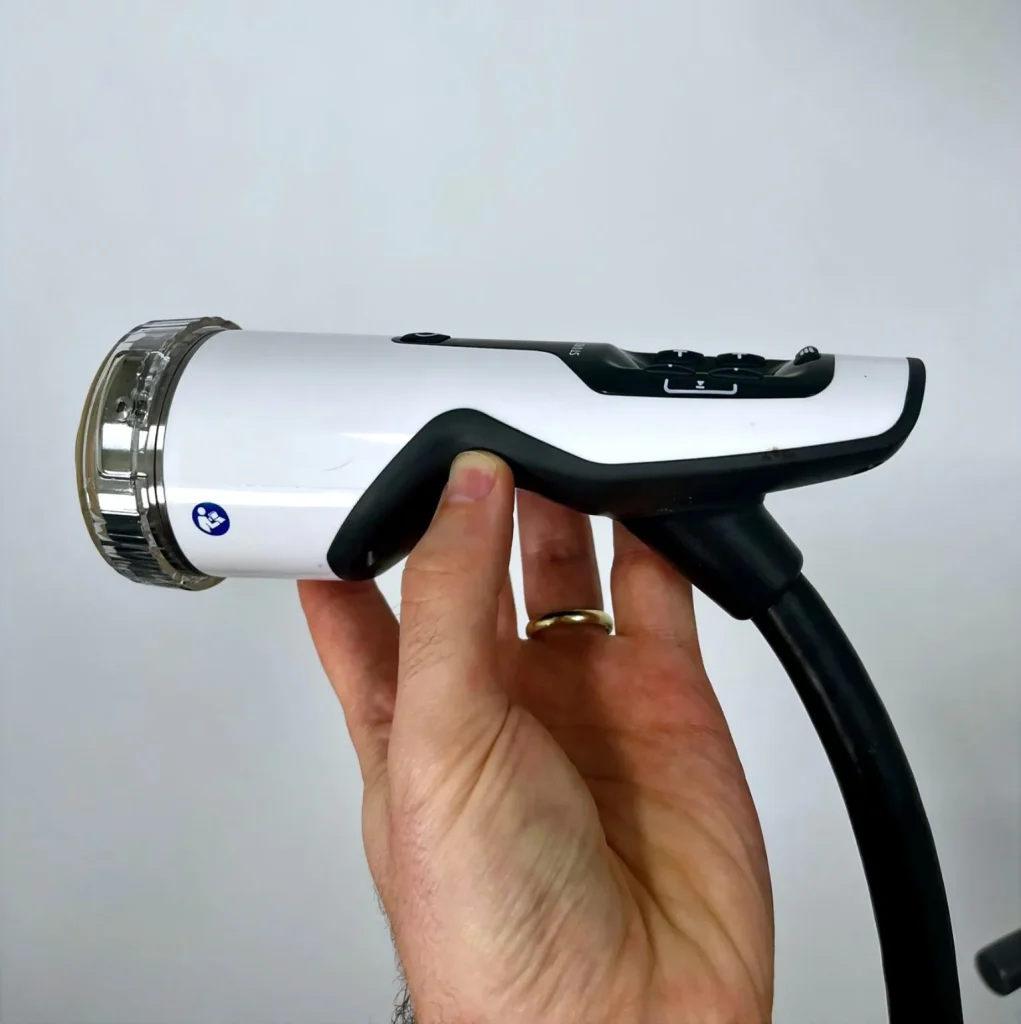
Shockwave delivers a pulse of pressure directly into the tissue that hasn’t been healing on its own.
With focused shockwave that’s high-pressure sound waves concentrated to a specific point and depth. With radial it’s mechanical pressure waves dispersed more broadly near the surface. (What’s the difference?)
That pulse aims to trigger three things in the tissue: encourage healing, improve blood flow, and help resolve stubborn long-running inflammation that’s stuck in a loop rather than settling down on its own.
Researchers are still working out exactly which of these matters most for which conditions. But the core idea, that a pressure pulse can trigger a real biological response in tissue that’s stopped healing, is well established.
Good shockwave treatment starts with knowing what you’re treating, where you’re treating it, and why.
It starts with the right assessment.
You may already know what hurts, and you may already have been told what the problem is. Good shockwave treatment starts by making sure the diagnosis, your symptoms, and what we find on assessment all fit together, so we can choose the most effective way to treat it.
It targets the right place.
Once we know what we’re treating, the next step is making sure we treat it precisely. We combine clinical examination with ultrasound mapping to identify the exact area involved and guide where we deliver the treatment.
It uses the right type of shockwave.
Focused and radial shockwave work differently. Which one we use depends on the tissue, its depth and what we’re trying to achieve.
And it has a plan around it.
When shockwave is part of a broader treatment plan, we’ll help you work out what you can keep doing, what may need to change for a while, and how to build things back up without putting your life on hold.
Shockwave therapy comes in two main forms, focused and radial, and most people searching for shockwave therapy aren’t aware there’s a difference. In fact, many clinicians aren’t aware there’s a difference either.
Focused shockwave concentrates energy to a precise depth and location, allowing treatment of deeper or more specific structures. Radial disperses energy more broadly near the surface and suits more superficial, wider areas of tissue.
We default to focused. It’s more precise, reaches deeper structures, and in our clinical experience gets better results for the conditions we treat most. It’s also what we’ve always done, going back to the Queensland Lithotripsy Services days. Twenty years of focused shockwave means our clinical judgment is built around it in a way it simply isn’t with radial.
We do use radial where it’s the better fit. But focused is where we’re most confident.
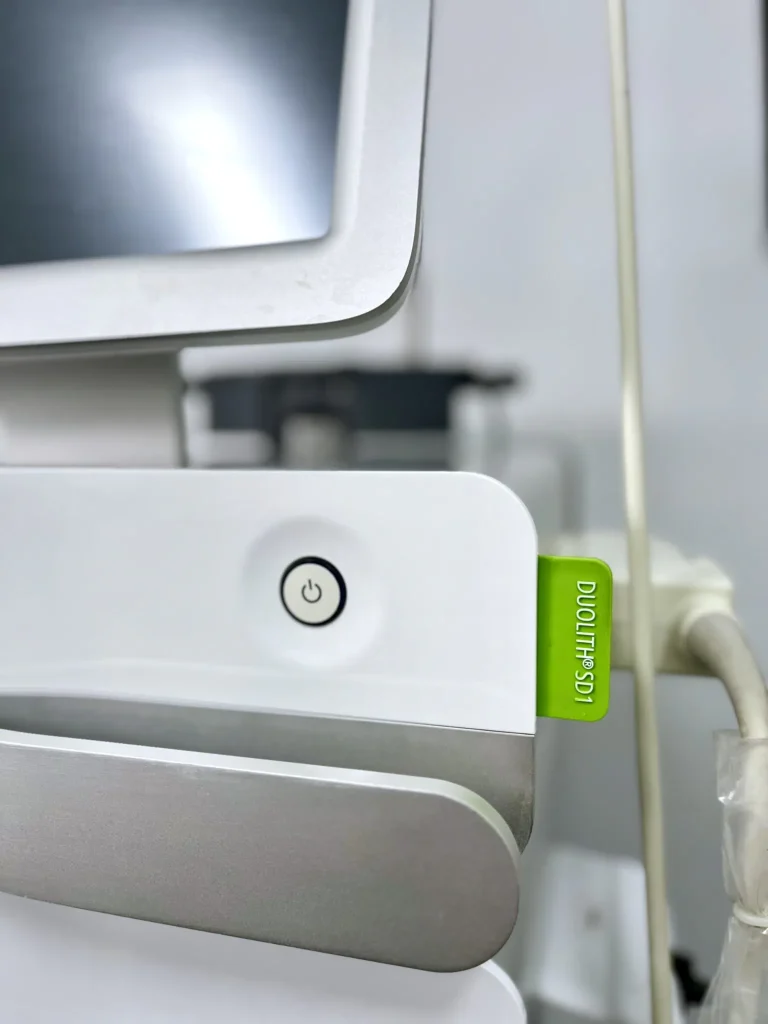
Our Storz Duolith SD1 Ultra incorporates both technologies alongside real-time ultrasound.

The person delivering your treatment should be able to do more than operate the machine.
They should be able to assess the problem, decide how and where to treat it, recognise when the plan needs to change, and understand what else may be contributing to your symptoms.
That’s why our shockwave treatment is delivered by physiotherapists.
You don’t have to come to us for ongoing physiotherapy. But you do get the benefit of a clinician who can make decisions about the whole problem, not just the shockwave session.
Most people’s hesitation about a new treatment isn’t really about the treatment. It’s not knowing what’s going to happen to them.
Before we treat anything we make sure shockwave is actually right for your problem. Not every kind of pain responds to it and we’ll tell you straight if something else makes more sense.
When it is the right fit, we use our Storz Medical Duolith SD1 to apply focused or radial shockwave pulses directly to the affected tissue, guided by what we find on assessment and ultrasound mapping.
Most protocols run across 4 to 6 weekly sessions, though this varies depending on the condition and how you respond.
If you’re already working with another practitioner handling your rehab, that’s fine. We’re happy to just do the treatment and keep your team in the loop.
If you’d like us to take care of the whole thing, shockwave sits within our UnPain Method alongside a broader plan built around getting you where you want to go.
If you’ve been referred for lithotripsy, or you’ve heard of Queensland Lithotripsy Services and you’re looking for the same treatment, you’re in the right place.
Lithotripsy is technically the medical term for treating kidney stones with shockwaves. Across Queensland it became the name people used for musculoskeletal shockwave therapy, largely because of Queensland Lithotripsy Services, one of the first providers in the state to use the technology for tendon and soft tissue conditions.
At Spine & Dandy we’ve continued that work. The treatment, the equipment and the clinical experience that built Queensland Lithotripsy Services’ reputation haven’t changed. We’ve moved toward calling it focused shockwave therapy because that’s the more accurate term and the one you’ll find in the research, but if you’ve been referred for lithotripsy, you’re in the right place.
If you’ve had lithotripsy before and want to continue, or your GP has referred you for lithotripsy, book in and we’ll take it from there.
You’ll feel pulses of pressure during treatment, and some spots can be tender, particularly in the first session. Most people find it very manageable. Any soreness afterwards is usually mild and short-lived.
This depends on the condition and how it responds. Research generally supports protocols of 4 to 6 weekly sessions, but some conditions need fewer and some need more. We’ll give you a clearer picture after your initial assessment.
We start with an assessment to make sure shockwave is the right approach for your specific issue and to plan the rest of your treatment around it.
If you’re already working with another practitioner handling your rehab, that’s fine. We’re happy to do the treatment and keep your team in the loop. If you’d like us to manage the whole thing, we can do that too.
Either way, the assessment comes first.
If your GP has set up a GP Chronic Condition Management Plan for a chronic condition, Medicare can contribute to the cost of your sessions. The current rebate is $63.40 per session and you can access up to 5 allied health sessions per calendar year. Those 5 sessions are shared across all allied health services, so if you’re also seeing a podiatrist or dietitian, that comes out of the same pool.
If you’ve had your condition for 6 months or more and don’t have a plan in place, it’s worth asking your GP. It’s a straightforward process and can make a meaningful difference to the out of pocket cost.
For private health, coverage depends on your fund and level of extras cover. Check with your provider before your first appointment.
Not sure where you stand? Give us a call and we can help work it out.
Cortisone reduces inflammation and pain short-term but doesn’t repair tissue. Shockwave aims to actively stimulate collagen production and healing in the damaged tissue itself, which is why it’s often considered for chronic cases that haven’t held up after cortisone.
Yes. Our Storz Medical Duolith SD1 delivers both focused and radial shockwave, and we determine which is right for you at assessment based on your specific condition.
No. All three can be used in physiotherapy but they work differently. Therapeutic ultrasound uses continuous sound waves, mainly for a gentle heating and mechanical effect in soft tissue. TENS uses a low-level electrical current, mainly aimed at changing pain signalling. Shockwave uses distinct, high-energy pressure pulses aimed at triggering a deeper tissue response. They’re different tools for different situations, and your physiotherapist will recommend whichever fits what’s actually going on for you.
Not sure if shockwave’s right for you? An assessment is the easiest way to find out — no obligation, no guesswork.